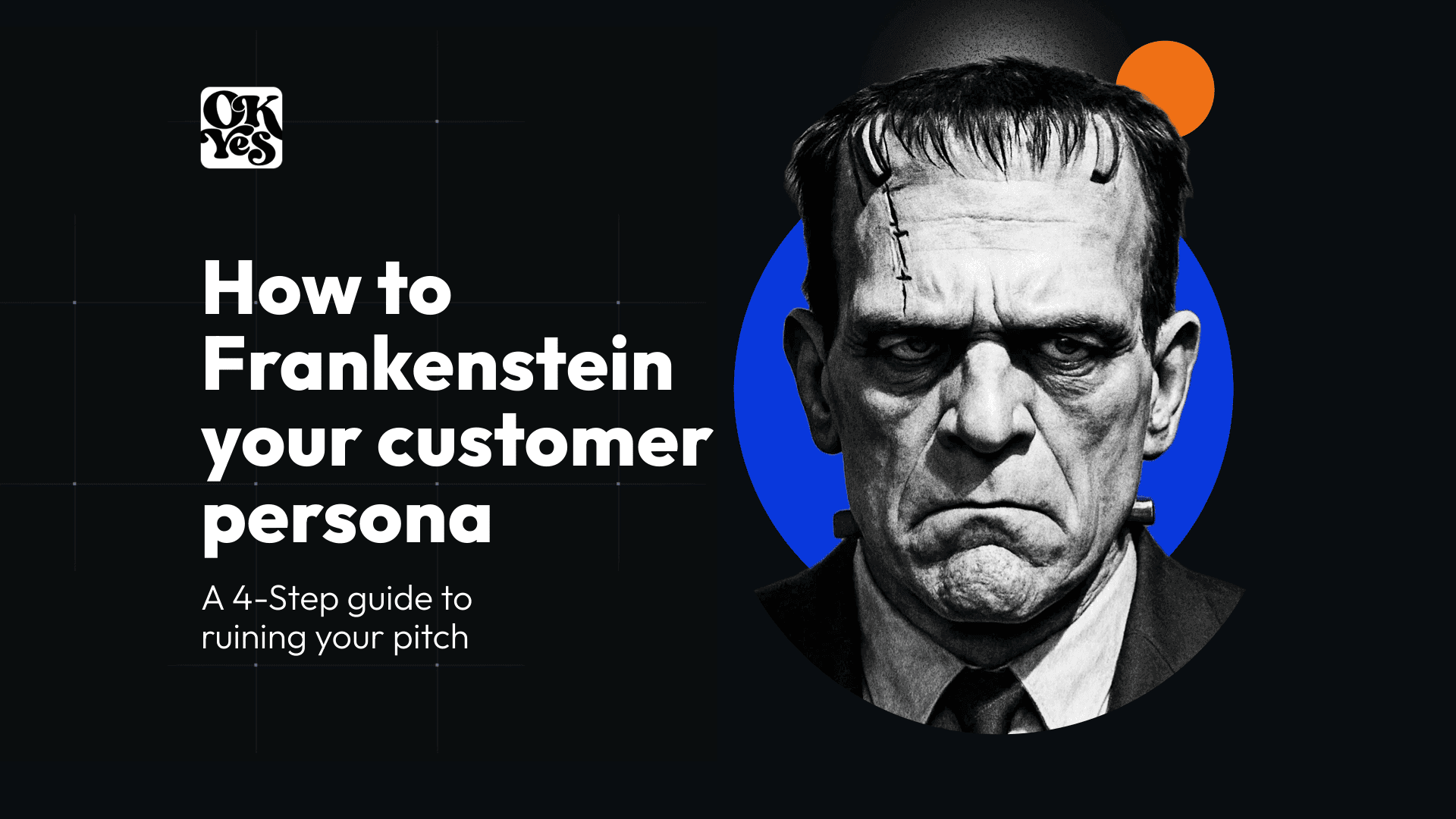
Your customer, the Frankenstein

Your customer, the Frankenstein

Your customer, the Frankenstein

Alejandra Copeland, Founder of Ok Yes Pitch Storytelling

Alejandra Copeland

Alejandra Copeland

Founder of Ok Yes Pitch Storytelling

Founder of Ok Yes Pitch Storytelling

May 20, 2025

May 20, 2025

One of the biggest mistakes I see entrepreneurs make when they want to pitch their business?

🧟‍♀️ They Frankenstein their ideal customer.

They stitch together a "convenient" persona made from random insights, second-hand assumptions, and vague trends:

👉 A juicy stat from a blog post
👉 A random insight from a one-off client
👉 A "target audience" that their competitor is going after
👉 A persona slide they haven't updated in two years

🙅🏻‍♀️ NO.

Here's the truth:

→ When your customer profile is vague, your message becomes generic.
→ When your message is generic, your offer feels replaceable.
→ And when your offer feels replaceable, you lose the sale.

You must use real stories, data, and empathy to build a message that resonates.

And guess what: Your audience can feel when they're not seen.

So, if you want your pitch to work, start by anchoring it in one real user story.

✅ This is why I created the Ok Yes 🅵🅸🆃 Storyboard Method: A storytelling framework that helps you pitch from your customer's point of view:

🅵 for Failure: What are they struggling with?
🅸 for Innovation: What have they tried? Why didn't it work?
🆃 for Transformation: How does your product finally help them win?

No fluff. No Frankensteins.

😉 It's why the 🅵🅸🆃 Method starts with 𝗙𝗮𝗶𝗹𝘂𝗿𝗲 and not 𝗙𝗲𝗮𝘁𝘂𝗿𝗲𝘀.

You'll get a clear, human-centered story that makes people say:

"Finally — someone gets it."

💥 Send me an email and I'll send you the template.

One of the biggest mistakes I see entrepreneurs make when they want to pitch their business?

🧟‍♀️ They Frankenstein their ideal customer.

They stitch together a "convenient" persona made from random insights, second-hand assumptions, and vague trends:

👉 A juicy stat from a blog post
👉 A random insight from a one-off client
👉 A "target audience" that their competitor is going after
👉 A persona slide they haven't updated in two years

🙅🏻‍♀️ NO.

Here's the truth:

→ When your customer profile is vague, your message becomes generic.
→ When your message is generic, your offer feels replaceable.
→ And when your offer feels replaceable, you lose the sale.

You must use real stories, data, and empathy to build a message that resonates.

And guess what: Your audience can feel when they're not seen.

So, if you want your pitch to work, start by anchoring it in one real user story.

✅ This is why I created the Ok Yes 🅵🅸🆃 Storyboard Method: A storytelling framework that helps you pitch from your customer's point of view:

🅵 for Failure: What are they struggling with?
🅸 for Innovation: What have they tried? Why didn't it work?
🆃 for Transformation: How does your product finally help them win?

No fluff. No Frankensteins.

😉 It's why the 🅵🅸🆃 Method starts with 𝗙𝗮𝗶𝗹𝘂𝗿𝗲 and not 𝗙𝗲𝗮𝘁𝘂𝗿𝗲𝘀.

You'll get a clear, human-centered story that makes people say:

"Finally — someone gets it."

💥 Send me an email and I'll send you the template.

One of the biggest mistakes I see entrepreneurs make when they want to pitch their business?

🧟‍♀️ They Frankenstein their ideal customer.

They stitch together a "convenient" persona made from random insights, second-hand assumptions, and vague trends:

👉 A juicy stat from a blog post
👉 A random insight from a one-off client
👉 A "target audience" that their competitor is going after
👉 A persona slide they haven't updated in two years

🙅🏻‍♀️ NO.

Here's the truth:

→ When your customer profile is vague, your message becomes generic.
→ When your message is generic, your offer feels replaceable.
→ And when your offer feels replaceable, you lose the sale.

You must use real stories, data, and empathy to build a message that resonates.

And guess what: Your audience can feel when they're not seen.

So, if you want your pitch to work, start by anchoring it in one real user story.

✅ This is why I created the Ok Yes 🅵🅸🆃 Storyboard Method: A storytelling framework that helps you pitch from your customer's point of view:

🅵 for Failure: What are they struggling with?
🅸 for Innovation: What have they tried? Why didn't it work?
🆃 for Transformation: How does your product finally help them win?

No fluff. No Frankensteins.

😉 It's why the 🅵🅸🆃 Method starts with 𝗙𝗮𝗶𝗹𝘂𝗿𝗲 and not 𝗙𝗲𝗮𝘁𝘂𝗿𝗲𝘀.

You'll get a clear, human-centered story that makes people say:

"Finally — someone gets it."

💥 Send me an email and I'll send you the template.

Alejandra Copeland, Founder of Ok Yes Pitch Storytelling

About Ok Yes Founder, Alejandra Copeland

Alejandra Copeland cut her teeth as a visual communication expert by producing and editing video content for MTV Networks, NBC Universal, and Viacom. Since 2004, Alejandra has pushed Andromeda Productions as a premier marketing video production agency. She has created enduring client relationships with multiple Fortune 500 companies such as MasterCard and Sony Music US Latin.

Alejandra Copeland cut her teeth as a visual communication expert by producing and editing video content for MTV Networks, NBC Universal, and Viacom. Since 2004, Alejandra has pushed Andromeda Productions as a premier marketing video production agency. She has created enduring client relationships with multiple Fortune 500 companies such as MasterCard and Sony Music US Latin.

All rights reserved © 2026 OK YES LLC.

All rights reserved © 2026 OK YES LLC.

All rights reserved © 2026 OK YES LLC.