
What Is the Best Opening Line to Start a Pitch?


What Is the Best Opening Line to Start a Pitch?

Alejandra Copeland
Alejandra Copeland
Founder of Ok Yes Pitch Storytelling
January 12, 2026
January 12, 2026
An opening line can make or break your pitch. The best opening line for a pitch should grab attention immediately, be relevant to the audience, and promise value.
There’s no single formula, but successful openings are concise, impactful, and tailored to the specific context and audience of the pitch. A strong opening sets the tone and lays the groundwork for a persuasive presentation.
Why Is the First Line of a Pitch Important?
The first line of a pitch is crucial because it sets the tone. In the first few seconds, the audience decides whether it’s worth paying attention. A weak opening can cause interest to drop instantly, while a strong one can spark curiosity and excitement. The opening line should be memorable and clearly signal why the pitch matters to the audience.
In the context of a pitch competition, for example, you’ve only got 3–5 minutes to pitch your business. In that short window, your opening line breaks the ice and sets the expectation for what will follow.
What Elements Should a Good Opening Line Include?
If your first sentence doesn’t hook them, it’s nearly impossible to regain their attention. A strong opening line should include the following elements:
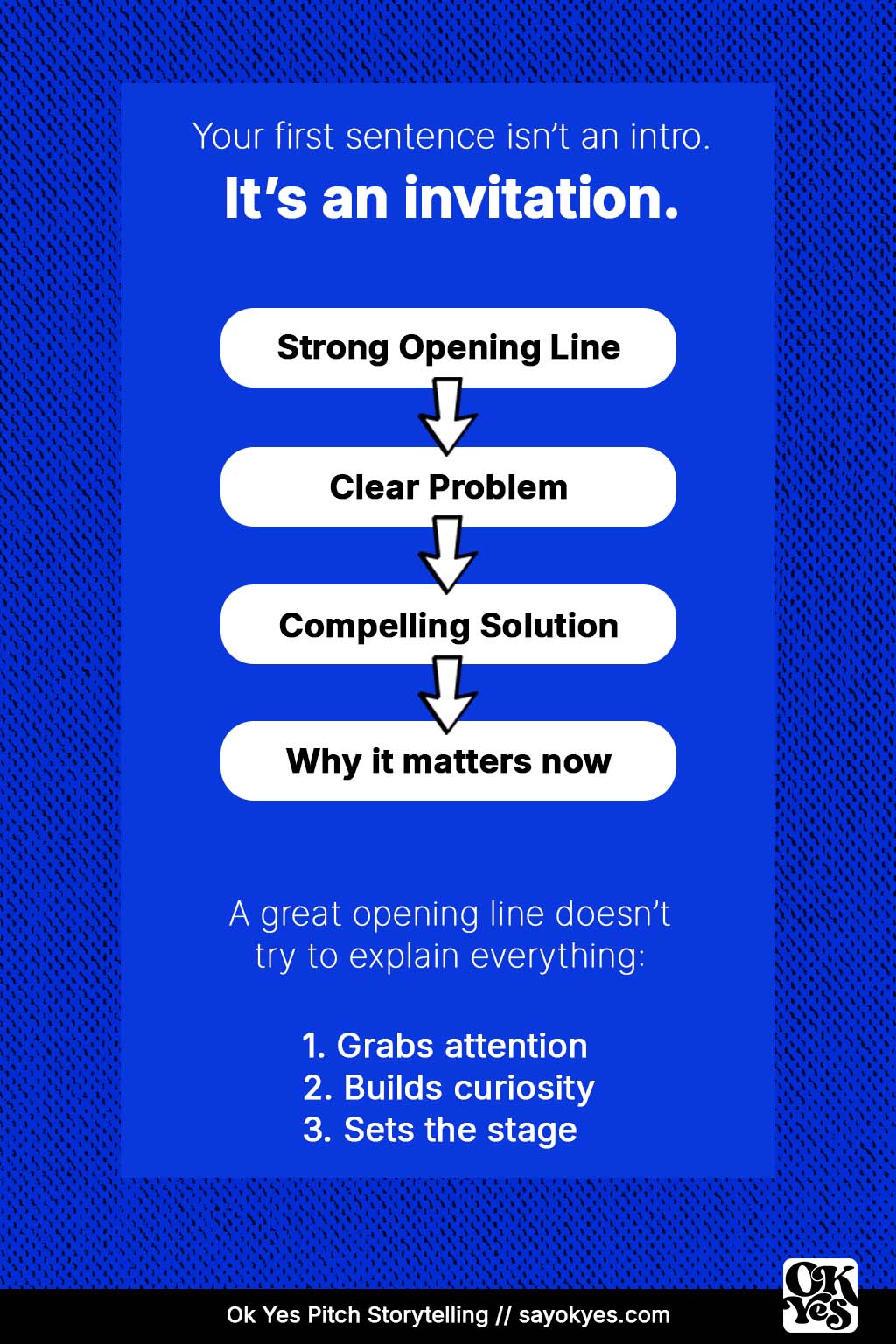
In a nutshell, a great pitch opener checks these criteria:
Grabs attention: It disrupts the noise. It should immediately capture the audience’s attention.
Builds curiosity: It sparks a question. It must connect to the audience’s interests and needs.
Sets the stage: It signals where the story is going and why it matters. It should be direct and to the point.
Whatever opener you choose, it should lead naturally into your Problem-Solution narrative.
What Are Some Examples of Effective Opening Lines?
Here are a few examples of effective opening lines:
Problem: “Have you ever wondered how [problem]?”
Solution: “We have a solution for [problem] that can [benefit].”
Statistic: “[VERIFIABLE BRAND/STUDY DATA]% of companies face [challenge].”
Question: “What if you could [benefit]?”
Story: “Let me tell you a story about how [client] achieved [result].”
How Do You Adapt the Opening Line to Your Audience?
Adapting your opening line to your specific audience is essential. Research who they are and understand their needs, interests, and challenges. Use language that resonates with them, and avoid jargon or technical terms they may not understand. Personalize the opening so they feel seen and engaged from the very start.
But pay attention: Don’t just pick one that sounds cool.
Pick the one that fits your story and opens the door to the transformation you’re promising.
How Can You Measure the Effectiveness of an Opening Line?
The only way to test your opening is to pitch often and pay attention to the reactions.
You can gauge the effectiveness of an opening line by observing your audience, even in a one-on-one conversation. Pay attention to body language, facial expressions, and levels of participation. If the audience seems engaged and attentive, that’s a strong signal that the opening worked. You can also ask for direct feedback to get a more accurate assessment.
What Mistakes Should You Avoid in an Opening Line?
Avoid these common mistakes:
Being generic: Skip clichés and unoriginal phrases.
Being irrelevant: Make sure the opening actually matters to your audience and topic.
Being confusing: Use clear, simple language. No jargon or industry terms!
Being too negative: Drama is great for grabbing attention, but when it's too much, it can backfire by distracting the audience. Beware of horribly pessimistic or discouraging statements.
Being too long: Keep it sharp and focused.
How Do You Practice and Refine an Opening Line?
Practice your opening line repeatedly. Record yourself and review the delivery to spot areas for improvement. Ask colleagues or mentors for feedback to get different perspectives. The more you practice, the more confident and effective your delivery will be.
What Tools Can Help Create an Impactful Opening Line?
In my 10 Power Pitch Openers Guide from the Ok Yes Pro system, you'll be able to explore more options and decide which intro line works best for you. It will help you understand why each statement works, when to use it, and what it signals. You can also lean on my Storify Pitch Builder to generate attention-grabbing hooks.
Steps to Create the Perfect Opening for Your Pitch
Follow these steps to build a strong opening:
Define your goal: What do you want to achieve with your pitch?
Know your audience: Who are they and what do they care about?
Identify the problem: What problem are you solving?
Propose a solution: How does your product or service solve it?
Create the opening: Use the AI Storify Pitch Builder to generate several options, then choose the strongest one.
Practice and refine: Repeat and tweak until it feels natural.
Ready to transform your presentations?
Contact Ok Yes Pitch Storytelling today to discover how we can help you create irresistible pitches that capture attention and drive results.
An opening line can make or break your pitch. The best opening line for a pitch should grab attention immediately, be relevant to the audience, and promise value.
There’s no single formula, but successful openings are concise, impactful, and tailored to the specific context and audience of the pitch. A strong opening sets the tone and lays the groundwork for a persuasive presentation.
Why Is the First Line of a Pitch Important?
The first line of a pitch is crucial because it sets the tone. In the first few seconds, the audience decides whether it’s worth paying attention. A weak opening can cause interest to drop instantly, while a strong one can spark curiosity and excitement. The opening line should be memorable and clearly signal why the pitch matters to the audience.
In the context of a pitch competition, for example, you’ve only got 3–5 minutes to pitch your business. In that short window, your opening line breaks the ice and sets the expectation for what will follow.
What Elements Should a Good Opening Line Include?
If your first sentence doesn’t hook them, it’s nearly impossible to regain their attention. A strong opening line should include the following elements:
In a nutshell, a great pitch opener checks these criteria:
Grabs attention: It disrupts the noise. It should immediately capture the audience’s attention.
Builds curiosity: It sparks a question. It must connect to the audience’s interests and needs.
Sets the stage: It signals where the story is going and why it matters. It should be direct and to the point.
Whatever opener you choose, it should lead naturally into your Problem-Solution narrative.

What Are Some Examples of Effective Opening Lines?
Here are a few examples of effective opening lines:
Problem: “Have you ever wondered how [problem]?”
Solution: “We have a solution for [problem] that can [benefit].”
Statistic: “[VERIFIABLE BRAND/STUDY DATA]% of companies face [challenge].”
Question: “What if you could [benefit]?”
Story: “Let me tell you a story about how [client] achieved [result].”
How Do You Adapt the Opening Line to Your Audience?
Adapting your opening line to your specific audience is essential. Research who they are and understand their needs, interests, and challenges. Use language that resonates with them, and avoid jargon or technical terms they may not understand. Personalize the opening so they feel seen and engaged from the very start.
But pay attention: Don’t just pick one that sounds cool.
Pick the one that fits your story and opens the door to the transformation you’re promising.
How Can You Measure the Effectiveness of an Opening Line?
The only way to test your opening is to pitch often and pay attention to the reactions.
You can gauge the effectiveness of an opening line by observing your audience, even in a one-on-one conversation. Pay attention to body language, facial expressions, and levels of participation. If the audience seems engaged and attentive, that’s a strong signal that the opening worked. You can also ask for direct feedback to get a more accurate assessment.
What Mistakes Should You Avoid in an Opening Line?
Avoid these common mistakes:
Being generic: Skip clichés and unoriginal phrases.
Being irrelevant: Make sure the opening actually matters to your audience and topic.
Being confusing: Use clear, simple language. No jargon or industry terms!
Being too negative: Drama is great for grabbing attention, but when it's too much, it can backfire by distracting the audience. Beware of horribly pessimistic or discouraging statements.
Being too long: Keep it sharp and focused.
How Do You Practice and Refine an Opening Line?
Practice your opening line repeatedly. Record yourself and review the delivery to spot areas for improvement. Ask colleagues or mentors for feedback to get different perspectives. The more you practice, the more confident and effective your delivery will be.
What Tools Can Help Create an Impactful Opening Line?
In my 10 Power Pitch Openers Guide from the Ok Yes Pro system, you'll be able to explore more options and decide which intro line works best for you. It will help you understand why each statement works, when to use it, and what it signals. You can also lean on my Storify Pitch Builder to generate attention-grabbing hooks.

Steps to Create the Perfect Opening for Your Pitch
Follow these steps to build a strong opening:
Define your goal: What do you want to achieve with your pitch?
Know your audience: Who are they and what do they care about?
Identify the problem: What problem are you solving?
Propose a solution: How does your product or service solve it?
Create the opening: Use the AI Storify Pitch Builder to generate several options, then choose the strongest one.
Practice and refine: Repeat and tweak until it feels natural.
Ready to transform your presentations?
Contact Ok Yes Pitch Storytelling today to discover how we can help you create irresistible pitches that capture attention and drive results.
An opening line can make or break your pitch. The best opening line for a pitch should grab attention immediately, be relevant to the audience, and promise value.
There’s no single formula, but successful openings are concise, impactful, and tailored to the specific context and audience of the pitch. A strong opening sets the tone and lays the groundwork for a persuasive presentation.
Why Is the First Line of a Pitch Important?
The first line of a pitch is crucial because it sets the tone. In the first few seconds, the audience decides whether it’s worth paying attention. A weak opening can cause interest to drop instantly, while a strong one can spark curiosity and excitement. The opening line should be memorable and clearly signal why the pitch matters to the audience.
In the context of a pitch competition, for example, you’ve only got 3–5 minutes to pitch your business. In that short window, your opening line breaks the ice and sets the expectation for what will follow.
What Elements Should a Good Opening Line Include?
If your first sentence doesn’t hook them, it’s nearly impossible to regain their attention. A strong opening line should include the following elements:
In a nutshell, a great pitch opener checks these criteria:
Grabs attention: It disrupts the noise. It should immediately capture the audience’s attention.
Builds curiosity: It sparks a question. It must connect to the audience’s interests and needs.
Sets the stage: It signals where the story is going and why it matters. It should be direct and to the point.
Whatever opener you choose, it should lead naturally into your Problem-Solution narrative.

What Are Some Examples of Effective Opening Lines?
Here are a few examples of effective opening lines:
Problem: “Have you ever wondered how [problem]?”
Solution: “We have a solution for [problem] that can [benefit].”
Statistic: “[VERIFIABLE BRAND/STUDY DATA]% of companies face [challenge].”
Question: “What if you could [benefit]?”
Story: “Let me tell you a story about how [client] achieved [result].”
How Do You Adapt the Opening Line to Your Audience?
Adapting your opening line to your specific audience is essential. Research who they are and understand their needs, interests, and challenges. Use language that resonates with them, and avoid jargon or technical terms they may not understand. Personalize the opening so they feel seen and engaged from the very start.
But pay attention: Don’t just pick one that sounds cool.
Pick the one that fits your story and opens the door to the transformation you’re promising.
How Can You Measure the Effectiveness of an Opening Line?
The only way to test your opening is to pitch often and pay attention to the reactions.
You can gauge the effectiveness of an opening line by observing your audience, even in a one-on-one conversation. Pay attention to body language, facial expressions, and levels of participation. If the audience seems engaged and attentive, that’s a strong signal that the opening worked. You can also ask for direct feedback to get a more accurate assessment.
What Mistakes Should You Avoid in an Opening Line?
Avoid these common mistakes:
Being generic: Skip clichés and unoriginal phrases.
Being irrelevant: Make sure the opening actually matters to your audience and topic.
Being confusing: Use clear, simple language. No jargon or industry terms!
Being too negative: Drama is great for grabbing attention, but when it's too much, it can backfire by distracting the audience. Beware of horribly pessimistic or discouraging statements.
Being too long: Keep it sharp and focused.
How Do You Practice and Refine an Opening Line?
Practice your opening line repeatedly. Record yourself and review the delivery to spot areas for improvement. Ask colleagues or mentors for feedback to get different perspectives. The more you practice, the more confident and effective your delivery will be.
What Tools Can Help Create an Impactful Opening Line?
In my 10 Power Pitch Openers Guide from the Ok Yes Pro system, you'll be able to explore more options and decide which intro line works best for you. It will help you understand why each statement works, when to use it, and what it signals. You can also lean on my Storify Pitch Builder to generate attention-grabbing hooks.

Steps to Create the Perfect Opening for Your Pitch
Follow these steps to build a strong opening:
Define your goal: What do you want to achieve with your pitch?
Know your audience: Who are they and what do they care about?
Identify the problem: What problem are you solving?
Propose a solution: How does your product or service solve it?
Create the opening: Use the AI Storify Pitch Builder to generate several options, then choose the strongest one.
Practice and refine: Repeat and tweak until it feels natural.
Ready to transform your presentations?
Contact Ok Yes Pitch Storytelling today to discover how we can help you create irresistible pitches that capture attention and drive results.


About Ok Yes Founder, Alejandra Copeland
Alejandra Copeland cut her teeth as a visual communication expert by producing and editing video content for MTV Networks, NBC Universal, and Viacom. Since 2004, Alejandra has pushed Andromeda Productions as a premier marketing video production agency. She has created enduring client relationships with multiple Fortune 500 companies such as MasterCard and Sony Music US Latin.
All rights reserved © 2026 OK YES LLC.