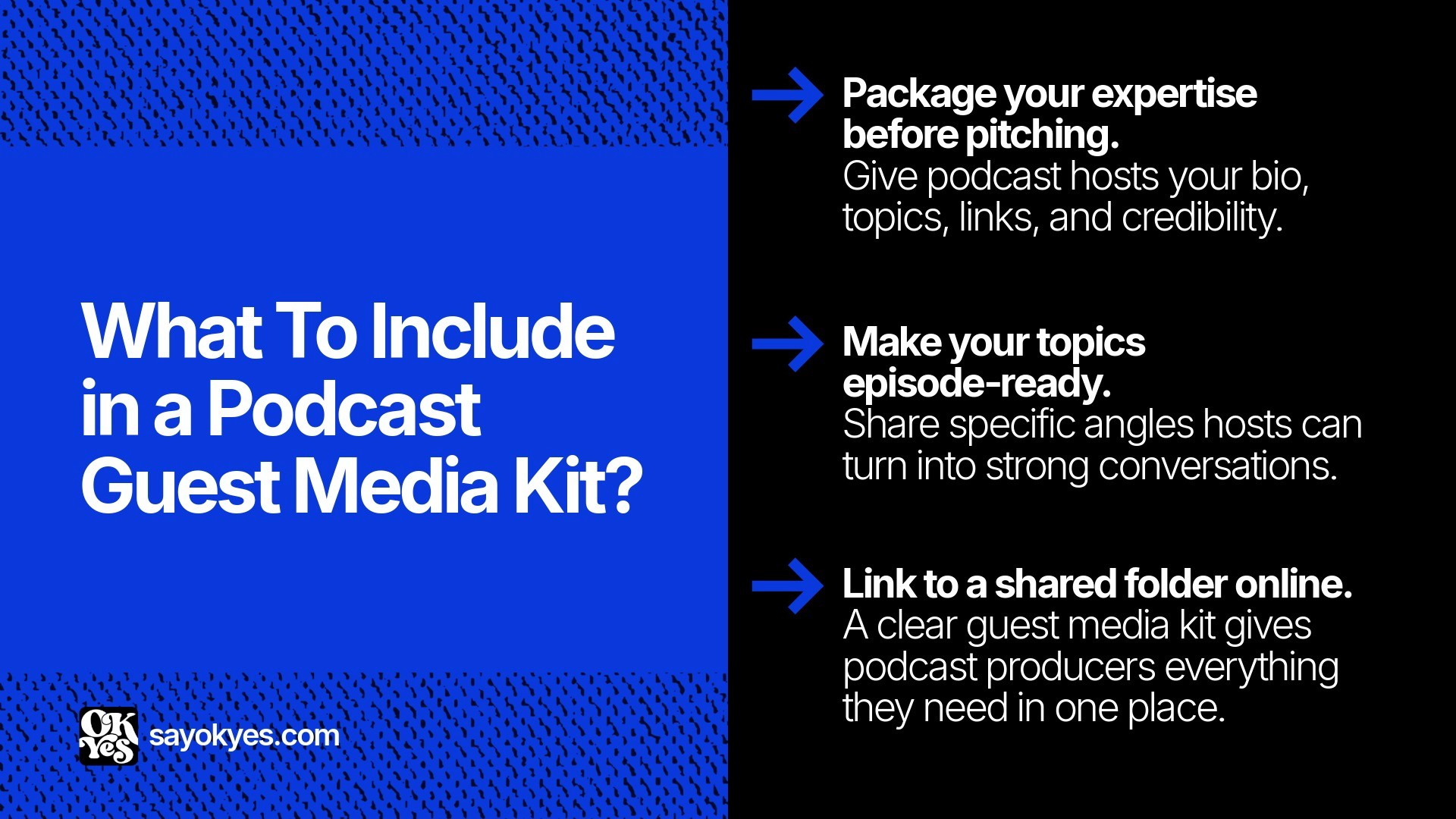
What To Include in a Podcast Guest Media Kit?
A podcast guest media kit is a short, organized asset that helps hosts quickly understand who you are, why you are credible, what you can speak about, and how to promote your episode. For founders, experts, and thought leaders, it should include a short bio, headshot, company details, topic ideas, talking points, social links, press links, and promotional assets.
Why does a podcast guest need a media kit?
Although it is not a requirement, having a podcast guest needs a media kit is effective because it makes the host’s job easier. I wrote an article on how to pitch yourself and get booked on podcasts here.
Podcast hosts are usually juggling guest research, episode planning, production, promotion, and scheduling. A clear guest media kit gives them everything they need in one place.
It helps you:
Look professional, prepared and credible
Reduce back-and-forth before the interview
Shape the conversation around your strongest ideas
Make promotion easier after the episode goes live
Increase the chance of being invited back or referred
A strong guest media kit is not a vanity document. It is a tool that helps the host create a better episode.
What should be in a podcast guest media kit?
A podcast guest media kit should include the information a host needs to book, introduce, interview, and promote you.
Keep it short. One page and a simple shared folder is often enough.
My recommended media kit checklist includes:
Short bio
Write a 50–100 word version that a host can use in the intro.One-line positioning statement
Explain who you help and what you are known for.Professional headshot
Include a high-resolution image for episode artwork, social posts, and newsletters.Company or founder background
Add your company name, role, website, and a short description of what the company does.Podcast topic ideas
Give the host 3–5 conversation angles you can speak about clearly.Suggested talking points
Add 5-7 short specific ideas, frameworks, opinions, or stories that would make a strong episode.Past interviews or press
Link to previous podcasts, articles, panels, or talks if available.Social and website links
Include LinkedIn, X, company website, newsletter, book page, or relevant landing page.Approved promotional language
Provide a short description hosts can use when promoting the episode.Contact and booking details
Add email, assistant contact, calendar link, and preferred spelling or pronunciation of your name.
What should expert guests include?
Expert guests should focus on credibility, clarity, and useful ideas.
Their media kit should answer: “Why should listeners trust this person?”
Include:
Area of expertise
Credentials or relevant experience
Signature frameworks
Strong opinions or contrarian takes
Topics they can explain clearly
Past media appearances
Books, reports, courses, or research
Audience-relevant examples
For example:
“I help B2B teams turn founder expertise into search-friendly content that can be used across SEO, AI search, newsletters, and social.”
That is much stronger than:
“I am a marketing strategist.”
What should founders include?
Founders should focus on the company story, category insight, and hard-earned lessons.
Their media kit should answer: “What can this founder teach from experience?”
Include:
Founder bio
Company description
Origin story
Category or market perspective
Customer problem
Key lessons learned
Fundraising or growth milestones, if relevant
Specific stories from building the company
Topics they do not want to discuss
Links to product, press, or demo pages
Founders should avoid making the kit too sales-heavy. The podcast is not a pitch deck. The best founder guests bring useful insight first and company context second.
What topic ideas should guests provide?
Guests should provide podcast topic ideas that are specific, timely, and useful to the host’s audience.
Good topic ideas sound like episodes, not generic expertise.
Instead of:
“Marketing, leadership, startups, AI”
Use question-based titles:
“How founders can turn customer questions into high-performing content”
“What early-stage teams get wrong about category creation”
“Why expert-led content works better than generic SEO content”
“How AI search is changing the way brands should structure blog posts”
“What I learned from building a company in a crowded market”
The goal is to make it easy for the host to imagine the episode.
What should guests avoid putting in a media kit?
Guests should avoid making the media kit too long, too self-promotional, or too vague.
Avoid:
A full resume
Long founder backstory
Generic topic lists
Overly polished corporate language
Too many links
Sales-heavy product messaging
Outdated bios or headshots
Claims without proof
Dense PDFs that are hard to scan
A good guest media kit should feel useful, not performative.
What is the best format for a podcast guest media kit?
The best format is a web page with a linked folder of assets.
Use:
Google Doc and PDFs for one-pagers and bios
Notion page
Personal media page
Shared Google Drive folder
The format matters less than the structure. Hosts should be able to find your bio, headshot, topics, links, and contact details in under one minute.
Final takeaway
A podcast guest media kit should make you easier to book, easier to introduce, easier to interview, and easier to promote.
For experts and founders, the goal is not to prove everything you have ever done. The goal is to help the host quickly understand your credibility, your best ideas, and the value you can bring to their audience.
At Ok Yes Pitch, we help founders and experts turn their point of view into content assets that work across podcasts, search, AI answers, newsletters, and social distribution.
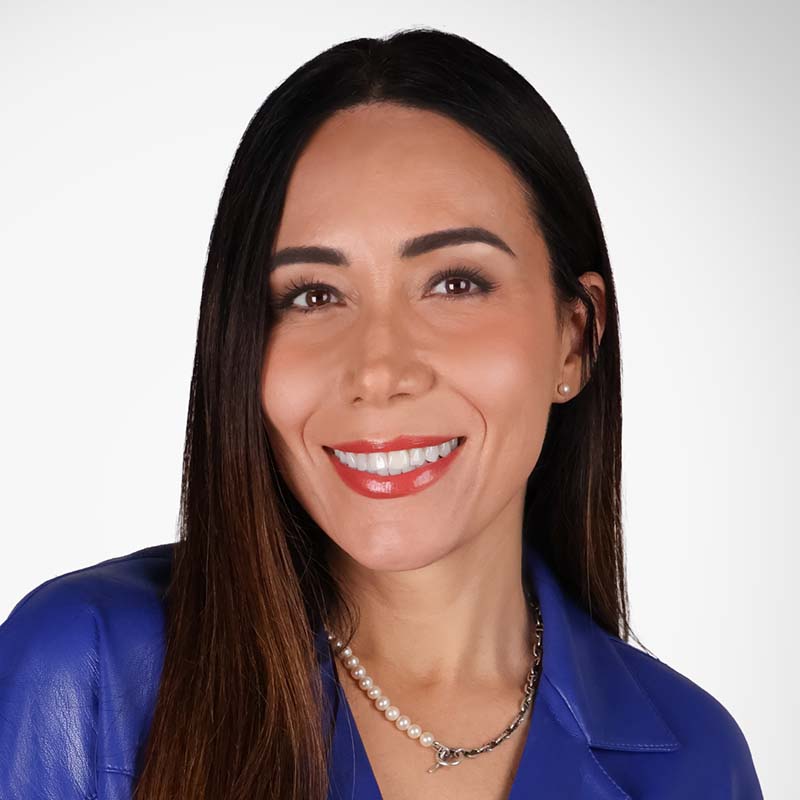
About Ok Yes Pitch Founder, Alejandra Copeland